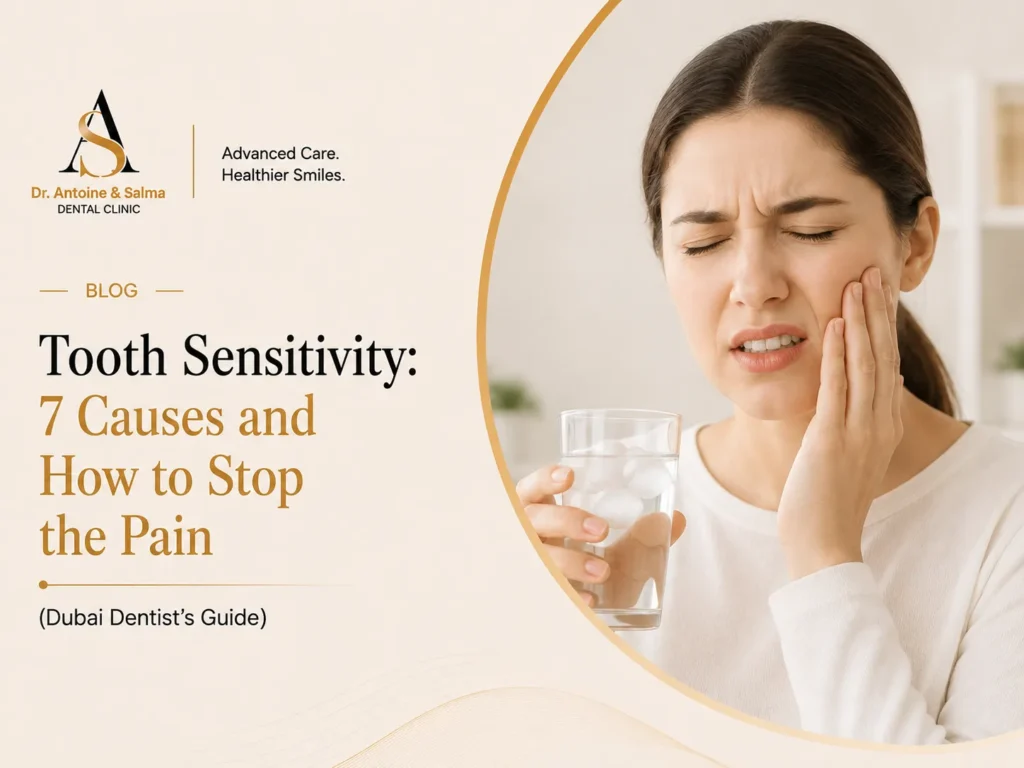
Experiencing a sudden, sharp jolt of pain when enjoying a chilled drink or a hot beverage can instantly ruin your day. This discomfort is incredibly common, yet many people simply try to ignore it or adapt their eating habits. Pinpointing the exact tooth sensitivity causes is the vital first step toward restoring your daily comfort.
When your teeth become sensitive to hot and cold, your body is warning you that the protective layers of your teeth have worn down. This exposure lets everyday temperatures travel deep into your dental nerves, triggering that familiar, sharp ache.
At AS Dental Clinic, we focus on diagnosing the root source of dental discomfort. Understanding why your teeth are sensitive helps you take back control of your oral health. Let us explore the most frequent triggers behind this condition and how modern dentistry can resolve the pain.
Dental Anatomy Explaining Tooth sensitivity causes
To truly understand how discomfort develops, it helps to know how a healthy tooth is built. Your teeth rely on a hard outer shield to block everyday sensations from reaching the nerve center.
- The Protective Enamel Layer: Enamel is the ultra-hard outer surface that shields the visible crown of your tooth. Because it contains no living cells, it cannot feel any pain on its own.
- The Porous Dentin Underlying Surface: Beneath the enamel lies a softer, mineralized layer called dentin. This surface contains thousands of microscopic fluid-filled pathways known as dentinal tubules.
- The Vulnerable Nerve Center: When enamel thins out, these tiny pathways become completely exposed to the elements. Thermal changes cause the fluid inside the tubules to shift, directly stimulating the nerve and triggering sensitive teeth hot and cold pain.
Common Mechanical and Behavioral Tooth Sensitivity Causes
Many daily habits slowly strip away your enamel without you even noticing it. Over time, these actions leave your teeth highly vulnerable to sudden temperature shifts.
Aggressive Manual Brushing Habits
- Hard Bristle Micro-Trauma: Scrubbing your teeth with stiff bristles cuts tiny grooves into your protective enamel over time.
- Incorrect Brushing Angles: Scrubbing forcefully from side to side pushes your delicate gum tissue away from the crowns, exposing the highly sensitive roots.
Unconscious Nighttime Teeth Grinding
- Enamel Friction and Micro-Fractures: Clenching or grinding your teeth during sleep puts immense pressure on your dentition. This friction slowly flattens the biting surfaces and creates micro-cracks.
- Structural Stress at the Gumline: The constant flexing of the tooth structure causes the enamel near your gumline to chip away, exposing the porous inner layers.
Chemical Wear and Sensitive Teeth After Whitening
What you put in your mouth and the aesthetic treatments you choose can temporarily or permanently alter how your teeth react to external temperatures.
High Intake of Acidic Beverages
- Chemical Enamel Erosion: Regular consumption of citrus juices, carbonated soft drinks, and specialty vinegars chemically dissolves your outer enamel. This gradual erosion thins out your tooth’s natural defense shield.
- Salivary Neutralization Delay: Snacking on acidic items throughout the day prevents your saliva from naturally remineralizing and strengthening your enamel surfaces.
Cosmetic Teeth Whitening Treatments
- Temporary Micro-Pore Opening: High-concentration whitening gels penetrate your enamel to break up deep stains. This chemical process temporarily opens up the microscopic pores in your teeth.
- Post-Treatment Neural Irritation: Experiencing sensitive teeth after whitening is highly common due to temporary nerve inflammation. Fortunately, this specific type of discomfort usually fades entirely within a few days.
Clinical Issues Requiring a Tooth Sensitivity Dentist in Dubai
Sometimes, temporary sensitivity points to an underlying dental problem that needs immediate medical care. Seeking help from a qualified tooth sensitivity dentist in Dubai ensures minor issues do not turn into major complications.
- Undetected Dental Cavities: Bacterial decay eats through your hard enamel, creating a direct pathway into the deeper structures. This allows hot, cold, or sugary foods to irritate the inner nerves.
- Fractured or Chipped Fillings: Older dental restorations can crack, leak, or pull away from the tooth structure over time. This architectural breakdown traps debris and exposes raw dentin to structural pressure.
- Deep Root Fractures: A structural crack running down towards the root canal allows external bacteria and temperatures to directly shock the dental pulp.
Advanced Gum Recession and Periodontal Tissue Loss
Your gums act like a protective collar around the base of your teeth. When this tissue pulls back, it leaves the most vulnerable parts of your dental anatomy completely bare.
Unlike the crown of your tooth, the root is not protected by enamel. Instead, it features a much thinner layer called cementum, which wears away quickly when exposed to your oral environment.
- Advanced Bacterial Tissue Disease: Chronic inflammation from untreated plaque buildup destroys the attachment fibers holding your gums to your teeth.
- Chronic Root Exposure: As the tissue recedes, the raw, unprotected root surfaces are left completely open to daily thermal changes.
- Deep Architectural Pockets: Spaces form between the shifting tissue and the tooth surface, creating a haven for bacteria that accelerates tissue recession.
Long-Lasting Sensitive Teeth Treatment in Dubai
Living with chronic dental pain is completely unnecessary. Modern dentistry provides a wide range of effective, comfortable solutions designed to stop the ache at its source.
At AS Dental Clinic, we customise every sensitive teeth treatment in Dubai to match your specific clinical needs. We focus on rebuilding your tooth’s natural defenses and sealing off exposed nerve pathways.
- Professional Fluoride Varnishes: We apply high-concentration minerals directly to your teeth to strengthen weakened enamel and block pain signals.
- Custom Protective Nightguards: For patients struggling with bruxism, a bespoke guard stops the destructive friction of nighttime grinding.
- Advanced Dental Bonding: Our specialists use a tooth-coloured composite resin to cover and seal heavily exposed root surfaces near the gum line.
- Targeted Gum Grafting: In cases of severe recession, minor tissue therapy restores the protective barrier over your vulnerable roots.
Experience Expert Dental Care at AS Dental Clinic.
Ready to Enjoy Your Favorite Drinks Pain-Free Again?
You do not have to let dental discomfort control what you eat and drink. Our compassionate dental specialists team at AS Dental Clinic is dedicated to finding the exact cause of your pain and providing lasting relief.
We use advanced diagnostic tools and gentle, modern treatments to restore your enamel protection effectively. Let us help you smile comfortably again.
Take action before a minor ache becomes a major dental emergency.
Book your detailed consultation in Dubai today!
Conclusion
Ignoring sudden dental pain can allow easily treatable issues to develop into complex internal infections. Taking a proactive approach to your oral health keeps your natural teeth strong, functional, and pain-free for years to come.
By addressing the specific tooth sensitivity causes early, you can enjoy your favorite foods and drinks without fear of a painful jolt. Relying on professional clinical care ensures your smile remains beautifully protected.
Frequently Asked Questions:
What are the primary tooth sensitivity causes that trigger sudden mouth pain?
The most common causes include worn enamel from hard brushing, exposed roots due to gum recession, teeth grinding, cavities, and consuming highly acidic foods.
How can a tooth sensitivity dentist in Dubai diagnose my specific pain?
A specialist performs a gentle visual and tactile exam, checks for enamel erosion or gum recession, and uses targeted tests to find the exact source of your discomfort.
What is the most effective sensitive teeth treatment in Dubai for exposed roots?
Dental bonding with a composite resin or professional desensitizing varnishes are highly effective for sealing exposed roots and instantly blocking pain signals from reaching the nerve.
Why do my teeth feel sensitive to hot and cold after a dental procedure?
Minor nerve irritation is completely normal after deep cleanings, fillings, or crown placements. This temporary sensitivity usually resolves on its own within a few days.
How can I prevent experiencing sensitive teeth after whitening procedures?
Using a desensitizing toothpaste a week before your appointment, opting for shorter bleaching sessions, and receiving a professional fluoride treatment helps minimize post-whitening discomfort.