Bone graft for dental implants is one of the most common procedures in modern implant dentistry. If you have been told you need one before getting implants, you are not alone and it is not as daunting as it sounds. Many patients who enquire about dental bone grafting in UAE clinics are surprised to learn …
Bone graft for dental implants is one of the most common procedures in modern implant dentistry. If you have been told you need one before getting implants, you are not alone and it is not as daunting as it sounds.
Many patients who enquire about dental bone grafting in UAE clinics are surprised to learn how routine and well-established the process is. This guide breaks it all down: why bone grafts are needed, what the different types involve, and how to know if you are a candidate.
Bone Graft Dental Implants: Understanding the Connection
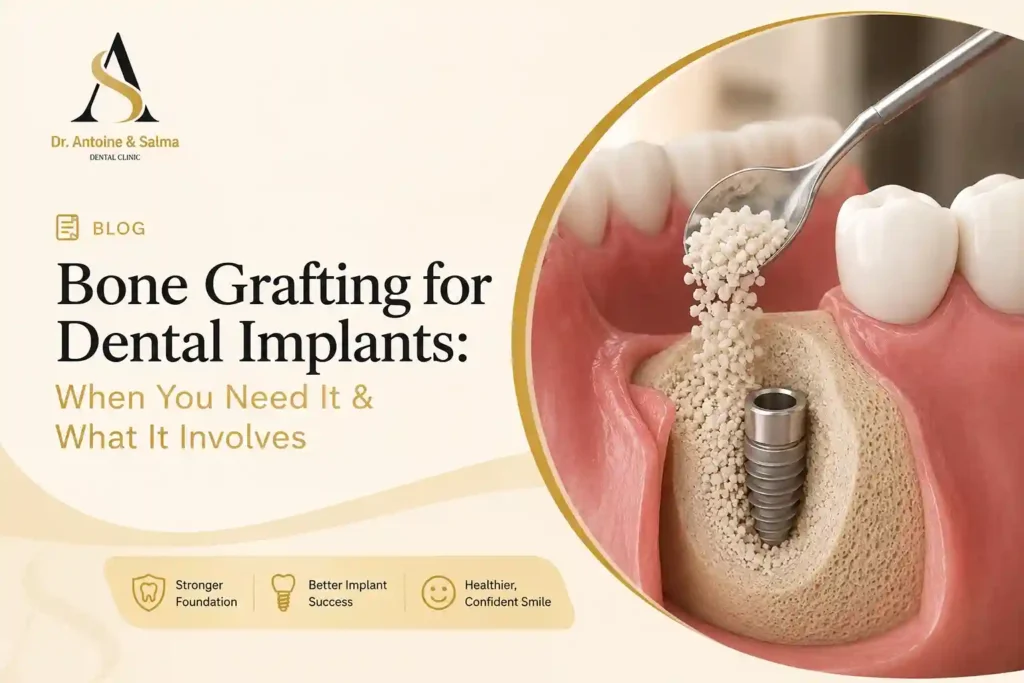
A dental implant is a titanium post that is placed into the jawbone. For it to stay stable, the bone around it must be dense and wide enough to hold it firmly in place.
When a tooth is lost, the jawbone beneath it begins to shrink. This process, called bone resorption, starts within weeks of a tooth being removed. The longer a tooth has been missing, the more bone volume is lost.
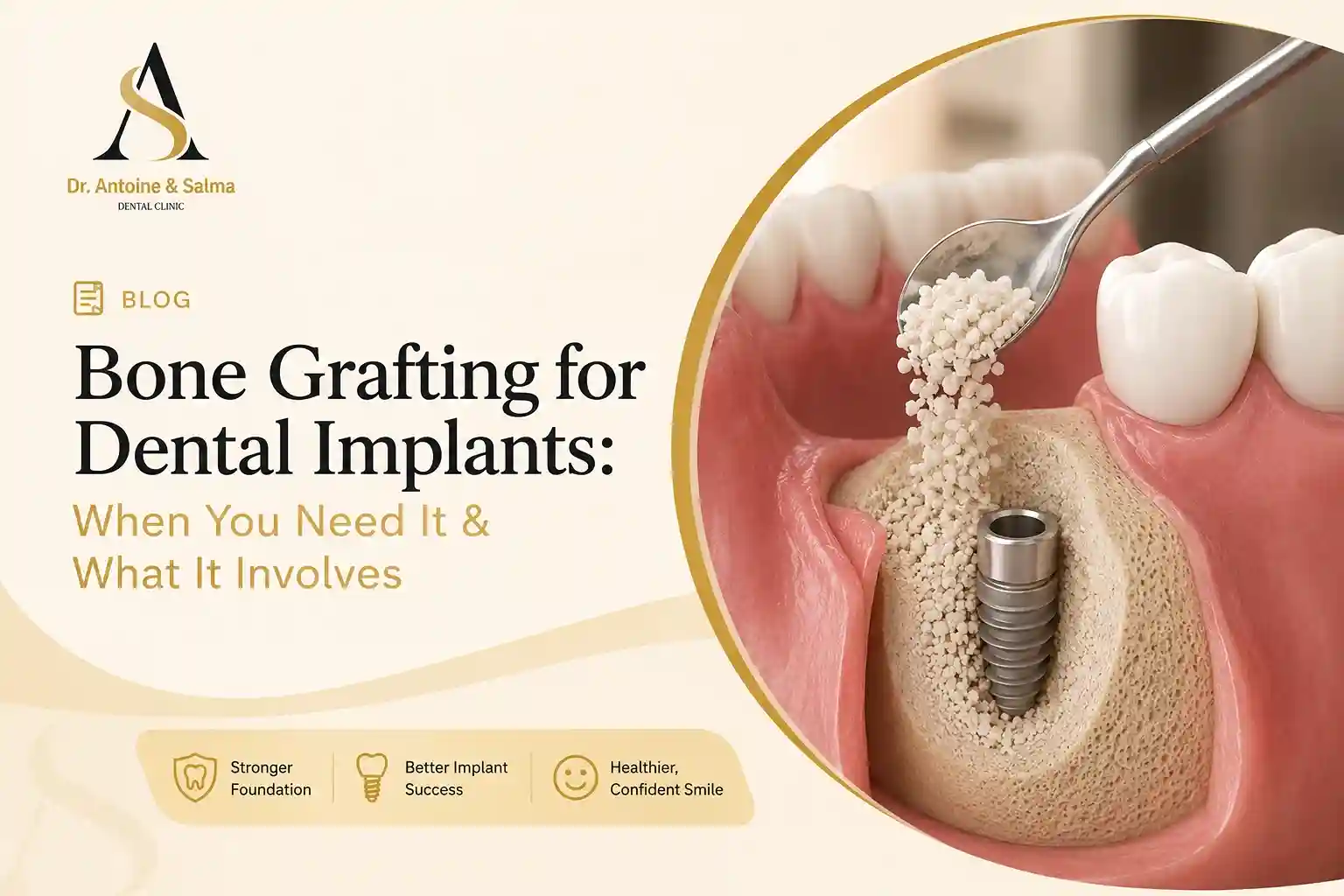
If there is not enough bone to support an implant, bone grafting procedures are used to rebuild the jaw. The graft material acts as a scaffold, encouraging the body to produce new, healthy bone tissue in the treated area.
Dental Bone Grafting in the UAE: Common Reasons Patients Need It
Not every implant patient requires a bone graft but many do. Here are the most common reasons dental bone grafting in UAE is recommended:
- Missing tooth for a long time: The longer a tooth has been absent, the more bone loss typically occurs.
- Gum disease history: Advanced periodontitis destroys the bone that supports teeth. Grafting restores what was lost.
- Tooth removed after infection: Abscesses and severe infections can compromise surrounding bone quality.
- Facial trauma or injury: Accidents affecting the jaw may leave insufficient bone for implant placement.
- Thin or narrow jaw: Some patients naturally have a jaw ridge that is too narrow to accommodate an implant safely.
- Upper back jaw region: The upper back area of the jaw often has limited bone depth due to sinus proximity, a sinus lift in Dubai addresses this specifically.
Research shows that nearly 40–50% of patients seeking dental implants require some form of bone augmentation before or during the procedure. It is a standard part of modern implant treatment, not a complication.
Types of Bone Augmentation Procedures for Implants
There are several types of bone augmentation procedures used in implant dentistry. The right one depends on where the bone loss is, how significant it is, and the location in the mouth.
Socket Preservation Graft
This is done immediately after a tooth extraction, before significant resorption occurs. Graft material is placed into the empty socket to maintain the ridge shape and preserve bone volume for a future implant.
It is the simplest form of bone graft dental implants preparation and is often performed alongside an extraction as a proactive step.
Ridge Augmentation
When the jaw ridge has already shrunk and become too narrow or flat, a ridge augmentation graft rebuilds its width and height. This creates enough volume for the implant to be placed securely.
This is one of the most frequently performed dental bone grafting procedures in UAE clinics and is typically done two to four months before implant placement.
Sinus Lift in Dubai
The upper back teeth sit very close to the sinus cavity. When these teeth are lost, the sinus can drop downward, leaving insufficient bone below it for an implant.
A sinus lift in Dubai, also called a sinus augmentation, gently lifts the sinus membrane upward and places graft material underneath it, creating new bone depth. It is one of the most sophisticated forms of bone augmentation for implants and requires a highly trained maxillofacial surgeon.
At A&S Dental Clinic, sinus lift procedures are performed by Dr. Antoine Habib, a specialist with extensive experience in complex sinus and bone augmentation cases across Dubai and the wider UAE.
Block Bone Graft
For patients with significant bone loss, a block graft may be taken from another area — usually from the back of the lower jaw or the chin — and fixed to the deficient site. This method is used for larger defects where standard graft materials may not provide sufficient volume.
Bone Graft Materials: Natural, Synthetic and Everything In Between
One of the most common questions patients ask is where the graft material comes from. There are four main types used in dental bone grafting in the UAE:
- Autograft: Bone taken from your own body, the gold standard. Highest success rate but requires a second surgical site.
- Allograft: Donor bone from a human tissue bank, processed and sterilised. Widely used and avoids a second surgical site.
- Xenograft: Processed animal bone (most commonly bovine). Very well established in implant dentistry, with excellent biocompatibility.
- Alloplast: Fully synthetic materials such as calcium phosphate or hydroxyapatite. No donor tissue required and fully predictable in quality.
Your surgeon will discuss the most appropriate material for your specific case. At A&S Dental Clinic, internationally certified materials with proven track records are used as standard, your safety and outcome come first.
Bone Graft Cost in Dubai: What Influences the Price
The bone graft cost in Dubai varies depending on several clinical and procedural factors. It is important to understand that a proper assessment always comes before any pricing discussion.
Factors that affect the overall bone graft cost in Dubai include:
- Type and extent of graft needed: A simple socket graft is considerably less complex than a full ridge augmentation or sinus lift.
- Graft material selected: Autografts requiring a second surgical site carry a higher overall cost than synthetic or allograft options.
- Sinus lift surgery cost: A sinus lift surgery involves additional surgical time, materials, and precision, this is reflected in the total cost.
- Clinic specialisation: A dedicated implant and maxillofacial specialist will approach complex cases with greater precision and accountability.
- Whether grafting is staged or simultaneous: Some cases allow grafting and implant placement at the same time, others require a separate surgical visit.
Insurance tip: In the UAE, certain insurers including Daman and AXA may cover bone augmentation procedures when they are clinically necessary. Always request a pre-authorisation from your provider before treatment. A&S Dental Clinic can assist with the required documentation.
The Bone Grafting and Implant Procedure: Step by Step
Understanding the process helps patients feel confident and prepared. Here is how a typical bone graft dental implant journey unfolds:
Step 1 — Diagnosis and 3D Assessment
A 3D CBCT scan gives the surgeon a detailed view of existing bone density, volume, and proximity to anatomical structures like the sinus. This determines whether bone augmentation is needed and which type is most suitable.
Step 2 — The Graft Procedure
The graft site is prepared, graft material is placed, and a protective membrane is often used to keep the area stable. The gum tissue is closed over the site. The procedure is done under local anaesthesia, with sedation available for anxious patients.
Step 3 — Healing Period
This is the stage that requires the most patience. Depending on the type of dental bone grafting, healing takes between two and nine months. During this time, the body remodels the graft material and produces new bone.
Step 4 — Implant Placement
Once healing is confirmed via a follow-up scan, the implant is placed into the newly formed bone. In some cases, particularly with socket preservation; grafting and implant placement can happen at the same appointment.
Recovery After Bone Augmentation for Implants
Most patients manage comfortably after a bone graft with the right preparation and aftercare. Here is what to expect:
- Days 1–3: Mild to moderate swelling and some discomfort. Prescribed pain relief keeps this manageable.
- Week 1–2: Soft diet recommended. Avoid pressure or trauma to the graft site. Rest as needed.
- Week 3–4: Swelling resolves. Energy returns. Most patients return to normal daily activity.
- Month 2–9: The graft integrates and new bone forms gradually. Your surgeon monitors progress with periodic imaging.
Good oral hygiene during recovery is essential. Your care team at A&S Dental Clinic will provide a full aftercare plan customized to your procedure.
Not Sure If You Need a Bone Graft? Find Out Today
Bone grafting is a specialist procedure and getting the right assessment from the start saves you time, money, and uncertainty. At A&S Dental Clinic, Dr. Antoine Habib evaluates every implant case individually using 3D CBCT imaging to determine exactly what your jaw needs.
Whether you need a simple socket graft or a sinus lift in Dubai, you will receive an honest, personalised treatment plan, no guesswork, no pressure.
Book Your Free Implant Assessment at A&S Dental Clinic.
Conclusion
A lack of bone does not mean you cannot have implants. It simply means your treatment plan includes one important extra step.
With the right specialist, bone graft dental implants procedures are highly predictable, well-tolerated, and produce lasting results. Whether you need a simple socket graft, a ridge augmentation, or a full sinus lift in Dubai, the key is working with a surgeon who understands the full clinical picture, not just the implant placement.
At A&S Dental Clinic, every patient begins with a thorough 3D assessment. Dr. Antoine Habib brings specialist-level maxillofacial expertise to every bone grafting and implant case, ensuring your jaw is properly prepared for an outcome built to last.
Frequently Asked Questions
Is a bone graft always needed before dental implants?
No, not all implant patients need a bone graft. It depends on the volume and density of existing bone, assessed via 3D CBCT scan during your implant consultation.
How long does bone graft healing take before implant placement?
Healing typically takes two to nine months, depending on the type of graft and the patient’s bone response. Your surgeon will confirm with a follow-up scan before proceeding.
Is a sinus lift in Dubai painful?
A sinus lift is performed under local anaesthesia, so patients feel no pain during the procedure. Post-operative discomfort is manageable with prescribed pain relief for a few days.
Can bone grafting and implants be done at the same time?
In some cases, yes. Socket preservation grafts at extraction time can allow same-day implant placement. Your surgeon will determine this based on your specific bone condition.
What affects bone graft cost in Dubai?
Costs depend on the graft type, material used, whether a sinus lift is required, and the complexity of your individual case. A proper diagnosis always precedes any pricing discussion.
Does dental insurance in the UAE cover bone augmentation?
Some UAE insurers like Daman and AXA may cover bone augmentation when medically documented. Pre-authorisation and a clinical report from your specialist are typically required.
Book Your Consultation Today!
If you’re tired of hiding your smile and want a permanent solution to missing teeth, A&S Dental Clinic is here to help!
Call us now or book your consultation online to find out if dental implants are right for you—even if you have bone loss or a complex case!