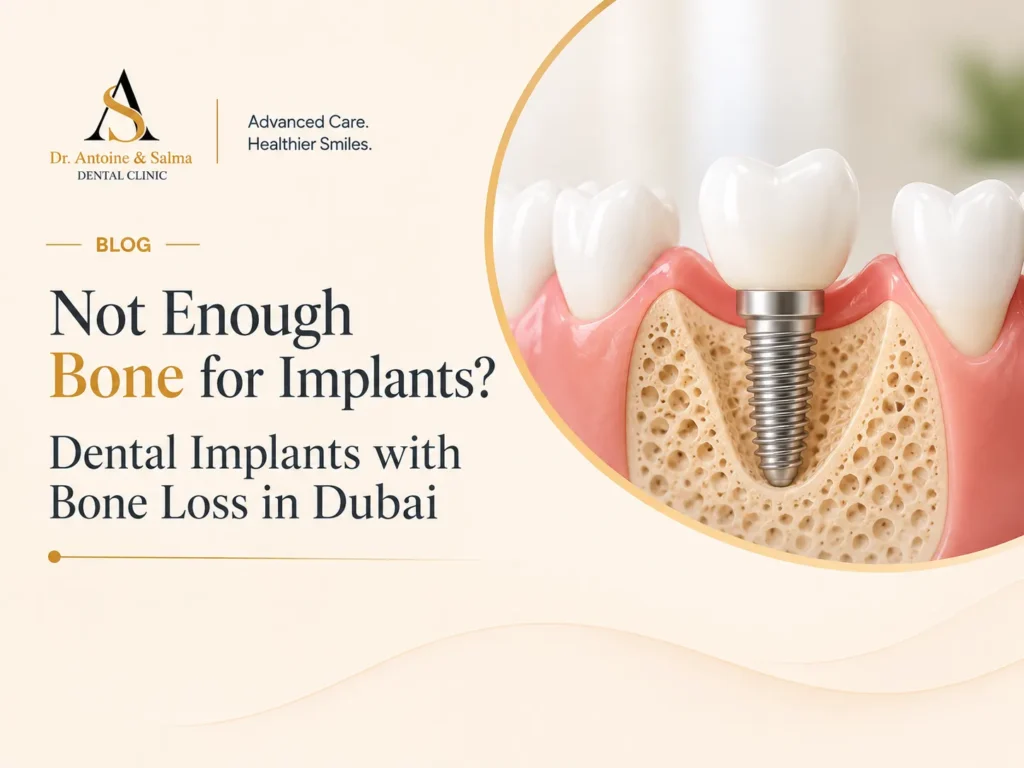
Dental implants with bone loss are often still possible. Being told you do not have enough bone usually means a standard implant cannot go in yet, not that treatment is ruled out. Options include bone grafting, a sinus lift, short or angled implants, and zygomatic implants, and a 3D scan shows which one fits your jaw.
This article explains why bone shrinks, what each fix involves, and how the plan changes from mild to severe loss.
Dental Implants with Bone Loss: Reasons Behind Jawbone Shrink
Jawbone stays strong when teeth load it during chewing. When a tooth is lost, that stimulation stops and the bone around the empty space begins to shrink. Gum disease, infection, injury, and long-term denture wear can speed this up. Most of the change after an extraction tends to occur in the first year.
Common causes include:
- Tooth extraction without a graft or implant
- Periodontal (gum) disease, which destroys bone around teeth
- Long-term dentures, which rest on the gums and do not stimulate bone
- Infection or cysts near a tooth root
- Trauma to the jaw
- Sinus expansion, where the air space above the upper back teeth grows downward after tooth loss
How Much Bone Do Implants Need?
Implants need enough bone in height and width to surround the implant and hold it firmly. There is no single number, because implant sizes vary and different areas of the jaw carry different loads. Your surgeon measures your bone on a CBCT scan, a 3D X-ray that also shows nerves and sinuses.
Two measurements matter most:
- Height: the distance from the ridge to a nerve or sinus
- Width: the thickness of the ridge from cheek side to tongue side
If either is too small, the plan changes. That is where the options below come in.
Mild, Moderate or Severe: What Changes?
| Level of Bone Loss | What the Scan Often Shows | Options a Surgeon May Discuss |
| Mild | Slight loss in width or height | Standard implants, sometimes with a small graft placed at the same visit |
| Moderate | Thin ridge or reduced height | Bone grafting before or with implants, sinus lift, short implants |
| Severe | Very thin ridge, lowered sinus, or little bone in the upper jaw | Staged grafting, angled implants, zygomatic implants, or an implant-supported denture |
These are general patterns, not a diagnosis. Each jaw is different, and the upper and lower jaw behave differently.
Which Treatments Rebuild or Work Around Bone?
Bone Grafting for Implants
Bone grafting for implants adds bone material to a thin or low area. The graft may come from your own body, a donor source, or a synthetic material. Over several months, your own bone grows into the graft and creates a firmer base. In some cases the graft and implant are placed together. In others, the graft heals first.
Sinus Lift
Upper back teeth sit under the sinus. When bone there is thin, a sinus lift raises the sinus floor gently and adds graft material beneath it. This creates height for implants. Healing time depends on how much bone is added, and your surgeon plans implant timing around it.
Ridge Expansion and Guided Bone Regeneration
When the ridge is too narrow, the surgeon can widen it or build it out using graft material and a protective membrane. This approach is called guided bone regeneration. It often suits front teeth, where width matters for stability and appearance.
Short, Narrow or Angled Implants
Not every case needs a graft. Shorter implants can fit in lower bone, and angled implants can use denser areas of the jaw. The All-on-4 method, for example, tilts the rear implants to avoid grafting in some patients. These options depend on bone quality and bite force.
Zygomatic Implants
For severe upper-jaw loss, zygomatic implants anchor in the cheekbone instead of the jaw. They are a specialist option, used when grafting is not suitable or not wanted. Planning must be precise, and not every clinic offers them.
Soft Tissue Augmentation
Healthy gum tissue protects implants over time. If the gum is thin or recessed, soft tissue augmentation adds volume around the implant. It can improve comfort, cleaning, and appearance.
Upper Jaw vs Lower Jaw: Where Bone Loss Hits Harder
The two jaws behave differently, so the plan often differs too.
- Upper jaw (maxilla): Bone is softer, and the sinuses sit above the back teeth. Low bone here often points to a sinus lift or angled implants.
- Lower jaw (mandible): Bone is usually denser, but the nerve that runs through it limits depth. Narrow ridges may need widening, and short implants are sometimes used.
Because of these differences, a clinic that treats both jaws regularly can tell you which risks apply to your case.
What Happens at a Bone Loss Consultation?
A bone loss assessment goes beyond a quick X-ray. Expect these steps:
- Clinical exam: The surgeon checks gums, remaining teeth, bite, and any signs of infection.
- CBCT scan: A 3D image measures bone height, width, density, nerves, and sinuses.
- Health review: Smoking, diabetes, medications, and past surgery are discussed.
- Written options: You receive the routes that suit your scan, with risks, timing, and an itemized estimate.
This is the point to ask about alternatives, including options that avoid grafting. A good consultation leaves you with choices, not pressure.
Can You Still Get Teeth in a Day With Bone Loss?
Sometimes. Teeth in a day, which means fixed temporary teeth on the day of surgery, depends on how firmly the implants hold. Low bone can reduce that stability. If a graft is needed first, temporary teeth are usually delayed.
In suitable cases, angled or longer implants can reach denser bone and allow fixed temporary teeth. Learn more about teeth in a day with bone loss and when it may be possible. Your surgeon decides after your scan and confirms again on the day of surgery.
What Does Recovery Look Like?
Recovery depends on the treatment.
- Implant only: Swelling usually settles in one to two weeks. The implant bonds to bone over about three to six months.
- With a graft or sinus lift: Expect extra healing time, often several months, before or after implants. Your surgeon sets the schedule.
- Zygomatic implants: Healing varies, and your team gives a personal timeline.
During any recovery:
- Follow your diet instructions
- Avoid smoking, which slows healing
- Do not press on the surgical area
- Keep follow-up appointments
Risks and Realistic Expectations
Bone grafting and implant surgery carry risks, including infection, graft failure, swelling, bruising, and sinus complications. Smoking, uncontrolled diabetes, and poor oral hygiene raise those risks. No clinic can promise a result. Evidence suggests that implants in grafted bone can work well when cases are chosen carefully, but success varies from patient to patient.
Ask your surgeon:
- How much bone do I have today?
- What happens if the graft does not take?
- Are there options without grafting?
- What will each stage cost, and how long will it take?
How to Slow Further Bone Loss
If you are not ready for treatment, you can still protect what you have.
- Treat gum disease early
- Replace missing teeth rather than leaving gaps for years
- Avoid wearing a loose denture for long periods without review
- Stop smoking
- Attend regular hygiene and checkup visits
Waiting often makes bone loss worse. A scan today gives you a baseline and a clear view of your choices.
Why Planning Matters More When Bone Is Low
With limited bone, small errors carry bigger consequences. 3D guided implant planning lets your surgeon map nerves, sinuses, and bone density before surgery, choose implant size and angle, and use a guide for placement. At A&S Dental Clinic, planning is led by an oral and maxillofacial surgeon, with a CBCT scanner on site.
If you want to compare treatment paths, our overview of dental implants in Dubai explains the options for single teeth through full arches.
What Affects the Cost?
Cost varies because bone loss cases are not alike. The main factors are:
- The type and amount of grafting
- Whether a sinus lift is needed
- The number, size, and brand of implants
- Whether staged surgery is required
- The crown or bridge material
- Sedation and follow-up visits
Ask for an itemized estimate after your scan. A&S Dental Clinic accepts Tabby and Tamara, and our team provides documents to support insurance reimbursement.
Told You Don’t Have Enough Bone? Bring Us Your Scan.
Many patients are turned away after one opinion. If you have a recent X-ray or CBCT, bring it, or send it to us. We will review it and explain, in plain language, whether grafting, a sinus lift, or another route could work.
Visit our Dental Clinic in Dubai or call +971 56 648 1481 today to book your second opinion.
Conclusion
Bone loss does not always rule out implants. Grafts, sinus lifts, short or angled implants, and zygomatic implants give surgeons several ways to rebuild or work around missing bone. The right route depends on a CBCT scan, your health, and your goals. Get a clear measurement of your bone, ask for written options, and decide with the facts.
Frequently Asked Questions:
Can you get dental implants with bone loss?
Often yes. Mild loss may need no extra steps, and moderate or severe loss may call for bone grafting, a sinus lift, short or angled implants, or zygomatic implants. A CBCT scan shows which option your jaw can support.
What if I have severe bone loss for dental implants?
Severe loss may need staged grafting, angled implants, or zygomatic implants in the upper jaw. Some patients choose an implant-supported denture instead. Your surgeon compares these routes after a CBCT scan and explains the risks.
How long does bone grafting take to heal?
Healing depends on the size of the graft and the area treated. It often takes several months before implants are placed or fully loaded. Your surgeon sets the schedule and checks progress with scans and follow-up visits.
Are implants possible with a low upper jaw?
Often yes. A sinus lift can add height beneath the sinus, and angled or zygomatic implants can work around low bone. The choice depends on how much bone remains, your bite, and your goals. A scan confirms it.
Can I get teeth in a day with bone loss?
Sometimes. It depends on how firmly the implants hold on the day of surgery. If bone is thin and a graft is needed first, temporary teeth are usually delayed. Your surgeon decides after your scan.
Does a dental implant with bone loss cost more?
Often, because grafts, a sinus lift, or staged surgery add procedures and time. Pricing is quoted in AED and varies by clinic. Ask for an itemized estimate after your scan so you can compare plans fairly.