A strong and dense jawbone provides the foundation for natural teeth and long-term restorations. For individuals experiencing bone resorption due to tooth loss, trauma, or gum disease, dental bone grafts in Dubai offer a reliable solution to rebuild structural stability. When natural bone recedes, restorative treatments like dental implants require additional support to achieve lasting success.
Undergoing a dental bone grafts in Dubai assessment allows oral surgeons to evaluate bone volume with precision. Modern oral surgery techniques ensure that placing a bone graft in mouth tissues restores natural jaw contours and chewing efficiency comfortably.
Dental Bone Grafts in Dubai: Understanding Surgical Bone Regeneration
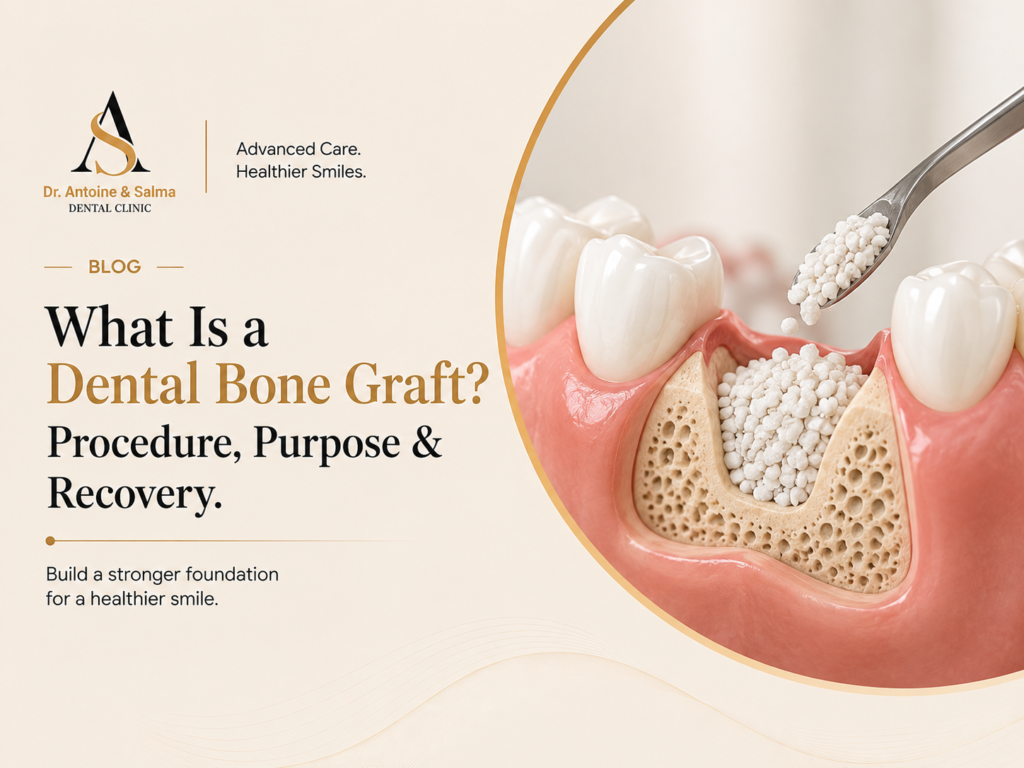
A dental bone graft is a specialised surgical technique that rebuilds lost or diminished jawbone volume. When a natural tooth root goes missing, the surrounding jawbone loses stimulation, leading to gradual bone atrophy over time.
To reverse this loss, an oral bone graft provides a biocompatible scaffolding where new bone cells can regenerate naturally. Over several months, the body replaces the grafting material with healthy, living bone tissue through a biological process called osseointegration.
The primary clinical purposes of this procedure include:
- Restoring Ridge Volume: Augmenting areas with severe bone shrinkage to support future dental work.
- Preserving Extraction Sockets: Preventing rapid collapse of the alveolar ridge immediately after tooth extraction.
- Lifting the Maxillary Sinus: Expanding bone height in the upper jaw when the sinus cavity lies too close to the jawline.
- Facial Contour Support: Preventing the collapsed, prematurely aged facial profile associated with extensive bone resorption.
Biocompatible Materials Used in Modern Dental Graft Surgery
Advancements in regenerative materials allow oral surgeons to select from several proven graft types. Each dental graft material delivers specific osteogenic properties customized to individual bone architecture.
The four standard categories of grafting materials are:
| Graft Type | Source/Origin | Key Characteristic/Functions |
| Autografts | Patient’s own body | Harvested from another site in the patient; provides active cellular growth factors. |
| Allografts | Human donor (certified tissue bank) | Sourced from human bone tissue; thoroughly processed, treated, and sterilised for safety. |
| Xenografts | Animal donor (commonly bovine) | Highly refined mineral matrices that integrate gradually with existing bone. |
| Alloplasts | Synthetic / Laboratory-engineered | Made from biocompatible minerals such as bioactive glass and calcium phosphate to create a clean scaffold. |
Consulting an experienced bone graft dentist in Dubai helps determine the exact material required for your unique clinical condition.
The Step-by-Step Bone Graft Dental Surgery Protocol at A&S Dental Clinic
Undergoing bone graft dental surgery at A&S Dental Clinic is a predictable, outpatient treatment completed under local anaesthesia or conscious sedation. Our modern surgical centre in Dubai combines specialized maxillofacial expertise with digital diagnostics to ensure total patient comfort and safety.
The standard surgical journey at A&S Dental Clinic involves four systematic stages:
- Diagnostic Assessment: High-resolution 3D Cone Beam CT (CBCT) scans assess exact bone density and anatomical boundaries to customize the surgical plan.
- Site Preparation: The surgeon numbs the area, makes a precise incision in the gum tissue, and thoroughly cleans and prepares the recipient bone bed.
- Material Placement: The chosen graft material is packed into the targeted bone deficiency and secured with a protective, biocompatible collagen membrane.
- Suture Closure: The gum tissue is repositioned and closed with fine, delicate sutures to safeguard the healing graft site.
At A&S Dental Clinic, advanced digital planning tools and guided surgical protocols ensure sub-millimeter precision at every step of your surgical treatment. This meticulous clinical approach is essential for patients undergoing Bone Grafting for Dental Implants to guarantee optimal structural stability and long-term restorative success.
Essential Post-Operative Recovery and Healing Guidelines
Following strict post-operative instructions ensures seamless tissue regeneration after a surgical bone graft in mouth procedure. The body requires time to integrate the biomaterial into a solid bone foundation.
Immediate Care (Days 1 to 3)
During the initial 72 hours, managing swelling and protecting the surgical site are the top priorities. Applying a cold compress to the external cheek near the treatment area helps minimize facial puffiness and bruising. It is vital to protect the newly formed blood clot by avoiding vigorous mouth rinsing, spitting, or drinking through a straw. Patients should consistently take their prescribed pain relievers and anti-inflammatory medications as directed by their surgeon to maintain comfort throughout the early healing phase.
Short-Term Recovery (Weeks 1 to 2)
As the initial tenderness subsides, dietary modifications and gentle oral hygiene support ongoing tissue repair. Patients should adhere to a soft-food diet featuring nutrient-dense options like lukewarm soups, smoothies, yogurt, and mashed vegetables, avoiding hot, crunchy, or spicy items that could irritate the surgical site. Strenuous physical exercise and heavy lifting must be avoided to prevent spikes in blood pressure that might trigger bleeding. Surrounding teeth can be cleaned gently, taking extra care to avoid direct contact or friction against the healing suture lines.
Long-Term Maturation (Months 2 to 6)
The final stage of recovery centers on deep structural remodeling beneath the gum tissue. Over several months, the placed biomaterial undergoes mineralization, gradually fusing with your natural jawbone to create a dense, stable foundation. Attending scheduled follow-up visits allows your dental specialist to monitor bone density levels via routine imaging, ensuring optimal integration before proceeding with permanent restorative treatments like dental implants.
Long-Term Benefits of Dental Bone Grafts in Dubai
Undergoing a targeted oral bone graft provides essential clinical and aesthetic advantages for individuals with reduced bone volume:
- Solid Foundation for Implants: Creates adequate width and height for secure, permanent dental implant anchoring.
- Prevention of Progressive Bone Loss: Halts the natural resorption process that follows tooth extraction.
- Preservation of Facial Structure: Keeps the lips and cheeks properly supported to maintain youthful facial contours.
- Enhanced Restorative Longevity: Ensures that adjacent teeth remain stable without shifting into empty spaces.
Patients planning comprehensive smile rehabilitations can explore the wide selection of available dental bone grafts in Dubai alongside treatments like the removal of veneers and other restorative options. While the procedure carries a consistently high success rate, understanding potential Failed Dental Bone Graft Signs & Causes helps patients monitor their recovery proactively and seek prompt clinical attention if unexpected complications arise.
Schedule Your Consultation at A&S Dental Clinic in Dubai
Rebuild your oral health foundation with advanced bone regeneration and personalized surgical care. At A&S Dental Clinic, treatments are led by Founder and Surgical Director Dr. Antoine Habib, a DHA-licensed Oral & Maxillofacial Surgeon with over 20 years of clinical expertise in complex bone reconstruction and implant rehabilitation.
Dr. Antoine Habib integrates cutting-edge 3D Cone Beam CT diagnostics, digital surgical planning, and minimally invasive Guided Bone Regeneration (GBR) protocols to restore bone volume safely and predictably. As an active member of leading international implantology associations and an academic lecturer in oral surgery, he ensures every patient receives precise, evidence-based care tailored to long-term oral stability and aesthetics.
Contact our clinic in Dubai today to schedule your comprehensive oral surgery and bone grafting consultation with Dr. Antoine Habib.
Conclusion
Securing adequate jawbone density is essential for achieving a stable, fully functional bite and natural facial aesthetics. Whether preparing for implant placement or preventing progressive bone atrophy after tooth loss, modern surgical bone augmentation offers predictable and long-lasting results. Working alongside a skilled surgical team ensures that your recovery remains smooth and that your oral health foundation stays strong for years to come.
Frequently Asked Questions:
1. Is dental bone grafting a painful surgical procedure?
Local anaesthesia and conscious sedation ensure complete comfort during surgery. Mild post-operative soreness is manageable with standard prescribed pain relievers.
2. How long does it take for a dental bone graft to heal?
Initial gum healing takes about 10 to 14 days, while complete bone integration requires 3 to 6 months before placing implants.
3. What foods should I eat after oral bone grafting?
Stick to soft, nutrient-dense foods like soups, eggs, smoothies, and purees. Avoid crunchy, spicy, or extremely hot meals during initial recovery.
4. Can a dental bone graft fail to integrate?
Failure is rare when performed by an experienced surgeon. Proper oral hygiene and avoiding smoking significantly improve graft integration rates.
5. Why do I need a bone graft before dental implants?
Dental implants require sufficient bone density and height for secure anchorage. Bone grafting provides the structural foundation needed for implant longevity.
6. How do I choose the best oral surgeon for a dental graft in Dubai?
Look for a DHA-licensed Oral & Maxillofacial Surgeon with proven expertise in guided bone reconstruction. At A&S Dental Clinic, Dr. Antoine Habib brings over 20 years of dedicated experience in surgical bone grafting, sinus lifts, and full-arch implant rehabilitation, ensuring high success rates and gentle patient care.