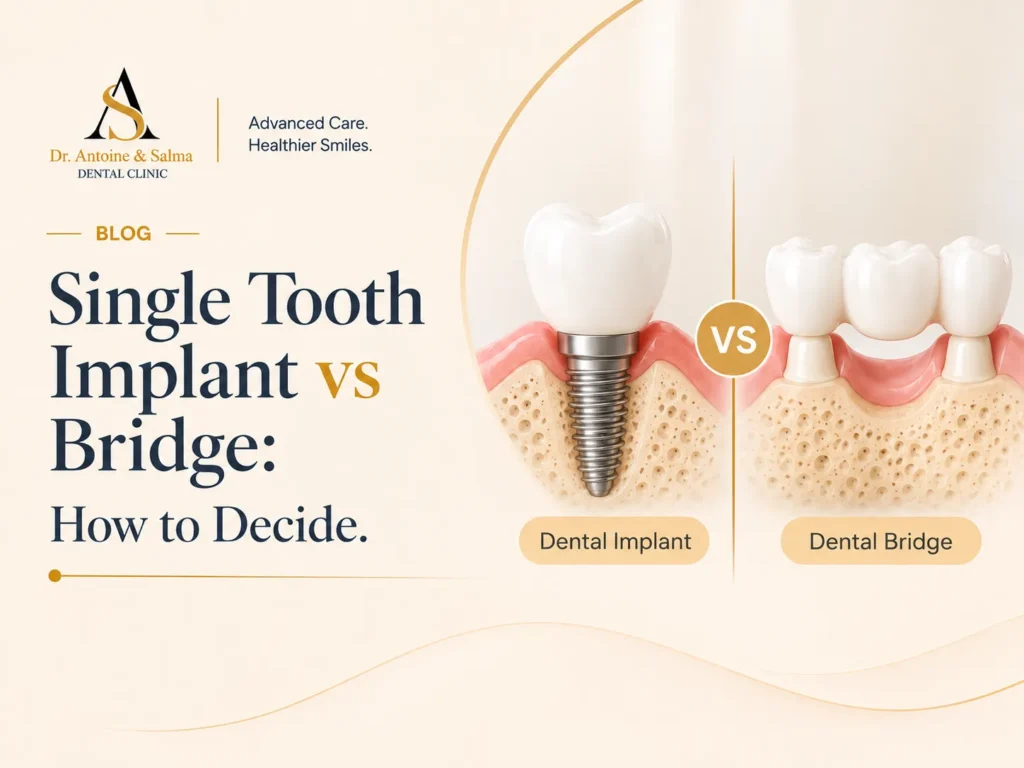
A single tooth implant replaces the missing tooth root and stands on its own, while a bridge uses the neighboring teeth as anchors. An implant usually suits healthy gaps with enough bone, and a bridge may suit patients who cannot have surgery or whose neighboring teeth already need crowns. Your scan, gums, and budget settle the choice.
The sections below give a quick verdict by situation, then walk through the five questions that decide it.
Single Tooth Implant vs Bridge: Key Differences
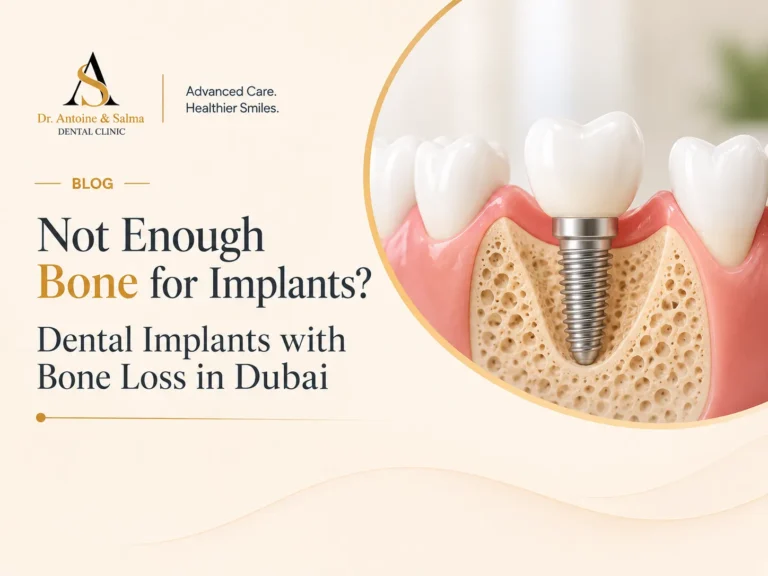
A single tooth implant is a titanium post placed in the jawbone with a crown on top. A dental bridge is a false tooth held in place by crowns on the teeth either side of the gap. The implant works independently, while the bridge depends on its neighbors.
How an Implant Works
The surgeon places the post, and the bone bonds to it over about three to six months, a process called osseointegration. A connector (abutment) and a custom crown are then fitted. Because the post sits in bone, it helps keep the jaw stimulated.
How a Bridge Works
The two neighboring teeth are shaped to hold crowns. A false tooth (pontic) is joined between them, and the whole unit is cemented in place. The process usually takes two visits and avoids surgery.
Quick Verdict by Situation
| Your Situation | Option That Often Fits | Why |
| Healthy neighboring teeth, enough bone | Single tooth implant | No need to cut down healthy teeth |
| Neighboring teeth already crowned or heavily filled | Dental bridge | Existing crowns can double as anchors |
| Thin bone, no wish for surgery | Dental bridge | Avoids grafting |
| Thin bone, wants a long-term fix | Implant with bone grafting | Rebuilds the base first |
| Medical conditions limit surgery | Dental bridge | Non-surgical |
| Several teeth missing in a row | Implants or a different plan | A single-tooth answer may not apply |
This table is a starting point. Only an exam and a 3D scan can confirm it.
The Five Questions That Decide It
1. Are the Neighboring Teeth Healthy?
A bridge requires shaving down the teeth on each side of the gap. If those teeth are healthy, this removes sound enamel that does not grow back. A single tooth implant leaves them untouched. If those teeth already have large fillings or crowns, a dental bridge may cost less in tooth structure.
2. Is There Enough Bone?
Implants need enough bone in height and width. After a tooth is lost, bone in that spot begins to shrink, and the longer you wait, the more it may change. A CBCT scan measures it. If bone is thin, bone grafting may be needed before or with the implant. A bridge does not need extra bone, which is one reason some patients choose it.
3. How Long Do You Want It to Last?
Lifespan is where the options differ most.
| Single Tooth Implant | Dental Bridge | |
| Typical lifespan | Often decades with good care | Commonly 10 to 15 years before repair or replacement |
| What can fail | Gum infection (peri-implantitis), loose crown | Decay under crowns, cement failure |
| Effect on neighbors | None | Anchor teeth carry extra load |
| Bone preservation | Stimulates bone at the site | Bone under the false tooth may shrink |
| Maintenance | Brushing, flossing, hygiene visits | Same, plus cleaning beneath the pontic |
Studies on bridge vs implant lifespan vary by patient and materials, and no clinic can promise a result. Hygiene, smoking, grinding, and gum health all affect both options.
4. What Are Your Budget and Timeline?
A bridge usually costs less upfront and takes fewer weeks. An implant usually costs more at the start and takes several months, including healing. Over time the gap may narrow, because a bridge often needs replacement sooner.
Dental bridge vs implant cost in Dubai depends on:
- Number of units and the materials used (zirconia, porcelain, e.max)
- Implant brand and the crown type
- Whether extraction, grafting, or a sinus procedure is needed
- Scans and surgical guides
- Follow-up visits
Pricing is quoted in AED and varies by clinic, so ask for an itemized estimate after your exam. A&S Dental Clinic accepts Tabby and Tamara. Insurance is not billed directly, but we provide documents for reimbursement claims.
5. How Do Your Gums and Bite Look?
Healthy gums support either option. Thin or receding gum tissue can make an implant harder to keep clean and less natural in appearance. In those cases, gum grafting around implants may be added to strengthen the area. A heavy bite or night grinding can stress crowns and bridges, and a night guard may be advised.
Implant vs Bridge: Pros and Cons
Single tooth implant
- Pros: Does not involve neighboring teeth, may help preserve bone, and is designed for long-term use
- Cons: Requires surgery, costs more upfront, and takes longer to complete
Dental bridge
- Pros: No surgery, faster, and often lower initial cost
- Cons: Reduces healthy tooth structure, can be harder to clean beneath, and typically needs replacement sooner
Neither is right for everyone. A written comparison from your surgeon, based on your own scan, is more useful than a general rule. Age, general health, smoking habits, and how long you plan to keep the tooth also shape the answer, so it helps to share your priorities openly at the first visit.
What Recovery Looks Like for Each
After an implant: Expect mild swelling and soreness for several days, managed with prescribed medication. A soft diet is common for the first week or two. The implant then heals quietly for three to six months before the final crown. Many patients return to work within a day or two, though this varies.
After a bridge: Teeth may feel sensitive for a few days after reshaping. You will wear a temporary bridge until the final one is ready. Once fitted, most people eat normally within days, with minor bite adjustments if needed.
Questions to Ask Before You Decide
Take these to your consultation. The answers show how well a plan fits your mouth.
- What does my scan show about bone in this area?
- How much of the neighboring teeth would need to be reshaped for a bridge?
- What would a bridge cost over 15 years, including replacement?
- What are the risks of an implant in my case?
- Who places the implant and who makes the crown?
- Which implant brand is used, and what follow-up is included?
A clear, written answer to each is a good sign. If a clinic pushes one option without showing your scan, consider a second opinion.
Special Situations
Front Tooth Trauma
A knocked-out or fractured front tooth is urgent. See a dentist as soon as possible, as quick action can sometimes save the tooth. If the tooth cannot be saved, the replacement choice follows the same questions above, with extra attention to gum shape and appearance. Learn more about front tooth trauma care at our clinic.
Young Patients
Implants are generally delayed until jaw growth is complete. A temporary solution may be used until then, and your dentist can advise on timing.
More Than One Missing Tooth
When several teeth are missing, a single-tooth decision stops applying. The comparison shifts toward multiple implants, bridges, or removable options. Our guide on implants vs dentures explains how those routes differ.
Other Options Worth Knowing
Two further choices sometimes come up. A resin-bonded bridge uses thin wings bonded behind the neighboring teeth, which removes less enamel but may suit only certain gaps and bite types. A removable partial denture costs less and needs no surgery, but it moves more and may feel bulky. Your dentist can explain whether either fits your case and what trade-offs come with them.
How Planning Improves the Decision
Planning turns a general question into a specific answer. 3D guided implant planning maps bone, nerves, and neighboring roots, so the surgeon can show you where the implant would sit and how the crown would look. At A&S Dental Clinic, CBCT imaging is on site, and our team treats implants, grafting, and restorations together. You can explore our wider range of dental implants in Dubai before you visit.
Choose Your Next Step
If you lean toward an implant: Book a CBCT scan. We will measure your bone, check your gums, and show you a written plan with the timeline and an itemized estimate.
If you lean toward a bridge: Book an exam. We will check the neighboring teeth, explain how much would need to be reshaped, and compare it with an implant on paper.
If you are not sure: Book a consultation and bring your questions. You can leave with both options explained and no obligation to proceed.
Visit our clinic in Dubai or call us to reserve your slot.
Conclusion
Choose an implant when the gap has enough bone, the neighboring teeth are healthy, and you want a long-term solution. Choose a bridge when surgery is not suitable, neighboring teeth already need crowns, or you need a faster and lower-cost route. Either way, a scan and a written plan make the decision clear. Book one and compare the options with your own numbers.
Frequently Asked Questions:
Is a single tooth implant better than a bridge?
Not always. An implant avoids reshaping neighboring teeth and may help preserve bone, but it needs surgery and costs more upfront. A bridge is faster and non-surgical. The right choice depends on your bone, neighboring teeth, health, and budget.
How long does an implant last compared with a bridge?
Implants often last for decades with good hygiene and checkups, while bridges commonly last about 10 to 15 years before repair or replacement. Results vary with gum health, smoking, grinding, and care. No clinic can promise a lifespan.
How much does an implant vs a bridge cost in Dubai?
Both are quoted in AED and vary by clinic. A bridge usually costs less upfront. An implant costs more at the start but may need fewer replacements. Brand, materials, and any grafting change the price. Ask for an itemized estimate.
Does a bridge damage the neighboring teeth?
A bridge requires shaping the teeth on each side of the gap to hold crowns. This removes healthy enamel and places extra load on those teeth. If they already have crowns or large fillings, the impact is smaller.
Can I get an implant if I have bone loss?
Often yes. Bone grafting or a sinus lift can rebuild the area before or with implant placement. A CBCT scan measures your bone and shows which route is possible. Some patients choose a bridge to avoid grafting.
How long does each option take?
A bridge usually takes about two visits over a few weeks. A single tooth implant takes several months, as the implant needs about three to six months to bond with bone before the final crown. Timelines vary by case.