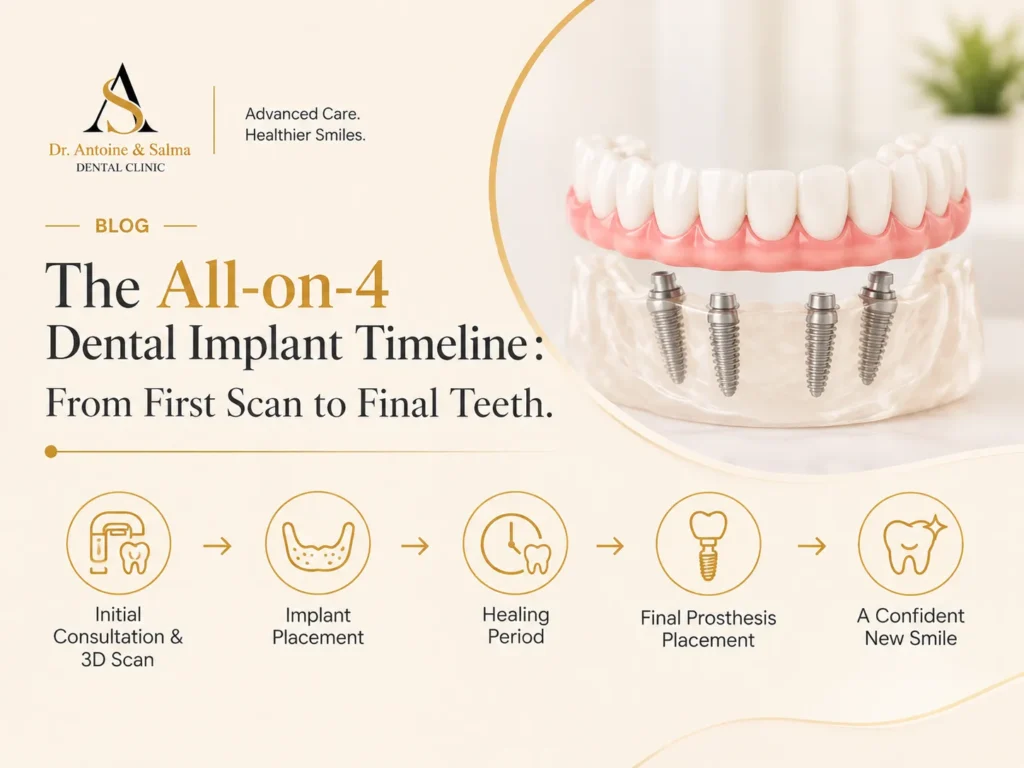
The All-on-4 dental implant timeline typically runs four to eight months from the first scan to the final bridge. Many patients receive fixed temporary teeth on surgery day, swelling settles within one to two weeks, and the implants need about three to six months to fuse with the jawbone before final teeth are fitted. Your own schedule depends on bone, health, and the jaw treated.
Here is how each stage works, what to expect week by week, and what can add time.
All-on-4 Timeline at a Glance
| Stage | Typical Timing | What Happens |
| Planning | 1 to 3 weeks | Exam, CBCT scan, digital plan, medical review |
| Surgery day | One visit | Extractions if needed, implant placement, temporary bridge |
| Early recovery | Days 1 to 14 | Swelling settles, sutures are checked or removed |
| Healing | Months 1 to 6 | Implants fuse with bone (osseointegration) |
| Final teeth | Months 3 to 6+ | Try-in, adjustments, final bridge fitted |
| Maintenance | Ongoing | Hygiene visits, bite checks, night guard if advised |
Timelines are estimates. Your surgeon confirms yours after the scan.
Before Surgery: The Planning Phase (1 to 3 Weeks)
Planning decides how smooth everything after it goes. It usually takes one to three weeks, depending on how quickly scans, tests, and any dental work are completed.
Consultation and Scans
Your first visit includes a clinical exam and a CBCT scan, a 3D X-ray that shows bone height, bone width, nerves, and sinuses. An intraoral scan captures the shape of your gums and any remaining teeth. These images show whether four implants can be supported and how they should be angled.
Medical Clearance
Your surgeon reviews your health history. Conditions such as diabetes, heart disease, or blood thinners may need input from your physician before surgery. Smoking is also discussed, because it can slow healing.
Digital Planning
Surgeons place implants on screen before touching the jaw. 3D guided implant planning maps implant positions, angles, and bridge shape, and it can produce a surgical guide for the day itself. This step also shows whether a bone graft or sinus lift is likely. If your plan includes extractions, the team also decides which teeth can be removed on surgery day and which need earlier treatment, such as infection control.
Surgery Day: What Happens in One Visit
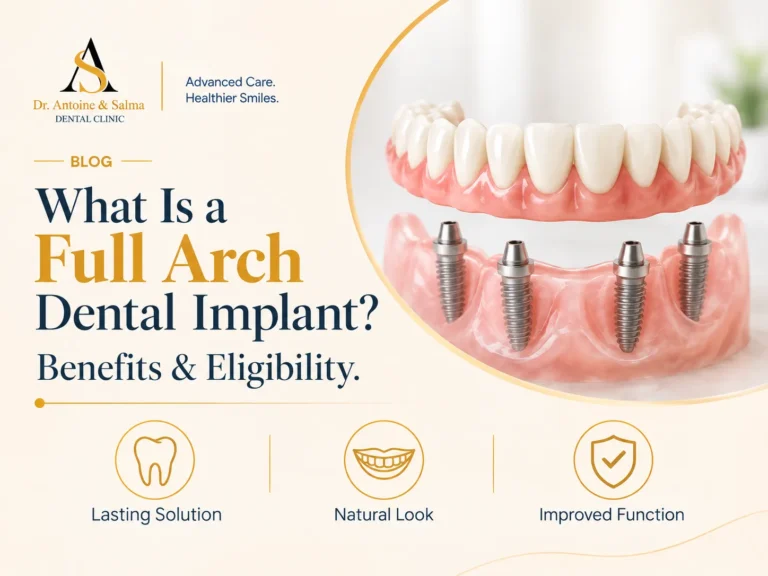
On surgery day, the team removes any failing teeth, places four implants, attaches connectors called multi-unit abutments, and fits a temporary bridge when the implants are stable enough. Treatment is usually done under local anesthesia, with sedation if you and your surgeon agree on it.
The sequence is typically:
- Anesthesia and extractions: Failing teeth are removed and the bone is smoothed.
- Implant placement: Four implants go in, often with the rear two tilted to use available bone.
- Stability check: The surgeon measures primary stability, including insertion torque. This reading helps decide whether a temporary bridge can be attached the same day.
- Abutments and bridge: Multi-unit abutments are fitted, and an acrylic temporary bridge is secured.
- Aftercare briefing: You receive diet, cleaning, and medication instructions.
If stability is low, your surgeon may advise delayed loading, which means healing without a bridge on the implants for a period. Many patients still go home with a temporary solution, so you are not left without teeth. The goal of this approach is teeth in a day, but it depends on what the surgeon finds, not on a promise made beforehand.
All-on-4 Recovery Week by Week
Recovery is gradual. Most patients feel the worst of it in the first few days and notice steady change after that.
Days 1 to 3
Swelling, bruising, and mild bleeding are common. Swelling often peaks around the second or third day. Ice packs, rest, prescribed medication, and a liquid or very soft diet help. Avoid spitting, straws, and rinsing hard.
Week 1
Discomfort usually eases. You switch to soft foods such as eggs, yogurt, soup, and mashed vegetables. Your team checks the gums and the temporary bridge. Sutures may be removed at around one to two weeks, depending on the type used.
Weeks 2 to 4
Bruising fades and most patients return to normal activity, including work. The diet stays soft. Bite pressure remains light, because the implants are still bonding to bone.
Weeks 5 to 12
Gums mature around the bridge. Your surgeon may adjust the bite or smooth rough areas of the temporary. Many patients move to softer-cooked meals and gradually add firmer foods when cleared.
Months 3 to 6: The Silent Phase
Osseointegration is the process in which bone grows onto the implant surface. It happens quietly and usually takes about three to six months. You may feel fine, but the implants are not ready for full chewing load until the surgeon confirms it.
During this time:
- Keep to the diet your team advises
- Clean the bridge gently with the tools provided
- Attend every follow-up visit
- Report loose parts, pain, or bleeding that does not settle
The lower jaw often heals faster than the upper jaw, because lower bone is typically denser. Upper-jaw cases may take longer, particularly with softer bone. Your surgeon may also see you for short check visits during this phase, to confirm the gums are healthy and the temporary bridge is intact. Heavy chewing, hard foods, and smoking are the most common reasons this phase goes off track.
Final Teeth: From Try-In to Delivery
The final bridge is made after healing is confirmed. This stage often takes two to four visits across several weeks, although labs and cases vary.
- New scans or impressions record the position of the implants and gums.
- Try-in: You see and feel a model or prototype. Shape, shade, and bite are adjusted.
- Final bridge delivery: A screw-retained bridge is fitted and tightened to the abutments.
- Bite check: Contact points are fine-tuned so pressure is spread evenly.
Final bridges are usually made from zirconia or acrylic over a titanium bar. Zirconia is hard and resists staining. Acrylic is lighter and easier to repair. Your surgeon and technician recommend one based on your bite, your jaw, and your budget. Implant brands also matter for parts and long-term support, and some clinics use systems such as Straumann.
What Can Stretch Your All-on-4 Timeline
Several factors may extend a schedule. None of them mean treatment is failing. They mean the plan is being adjusted for your biology. Ask your surgeon, before you start, which of these apply to you and how each would change your dates.
| Factor | How It May Affect Timing |
| Bone graft | Adds months of healing before or alongside implants |
| Sinus lift | Upper-jaw cases may need extra healing time |
| Smoking | Can slow healing and raise complication risk |
| Diabetes | Poor control may delay surgery or healing |
| Delayed loading | Final bridge may be fitted later |
| Bruxism | May require a night guard and slower bite loading |
| Upper vs lower jaw | Upper jaw often takes longer |
If your scan shows thin bone, bone grafting may be recommended first. It can add several months, but it may make implant placement possible where it otherwise would not be. In some cases, your surgeon may also discuss four or six implants depending on bone volume and bite force.
After the Final Teeth: Daily Life and Maintenance
Most patients return to work and social life well before the final bridge. After delivery, expect a short adjustment period for speech and chewing. Small bite changes are common in the first weeks, and a quick adjustment visit usually solves them. Plan review visits at regular intervals, as advised by your team, so small issues are found early.
Maintenance protects the investment:
- Brush and floss around the bridge each day
- Use a water flosser to clean beneath it
- Wear a night guard if you grind your teeth
- Book review visits for hygiene cleaning, bite checks, and screw checks
Healthy gum tissue also supports how natural the bridge looks. If gum shape or volume needs improvement, soft tissue support procedures may be considered. Bridges can wear over time, and repairs or replacements are part of long-term care.
Who Will Guide You Through Treatment in Dubai?
A full-arch case runs more smoothly when planning, surgery, and the final bridge sits under one team. At A&S Dental Clinic, your implants are placed by an oral and maxillofacial surgeon who is DHA licensed, with 3D imaging on site. You can read more about All-on-4 dental implants in Dubai and our wider range of dental implants in Dubai before you visit.
Your First Visit Checklist
A little preparation makes the first appointment more useful. Bring the following:
- Your passport or Emirates ID
- Past dental X-rays or reports, if you have them
- A list of current medications and any allergies
- Questions about timing, recovery, and cost
- Any insurance documents, for reimbursement support
Visit our Dental Clinic in Dubai or call +971 56 648 1481 today to book your consultation.
Conclusion
The All-on-4 dental implant timeline has four main parts: planning, surgery, healing, and final teeth. Expect a few weeks of planning, a one-visit surgery, about two weeks of early recovery, and three to six months before the final bridge. Bone grafts, smoking, and health conditions can extend that. A CBCT scan gives you a personal timeline.
Frequently Asked Questions:
How long does the All-on-4 process take from start to finish?
Most cases take about four to eight months from the first scan to the final bridge. That includes planning, surgery, and three to six months of healing. Bone grafts or health factors can add time. Your surgeon confirms your schedule.
Do I get teeth on the day of All-on-4 surgery?
Many patients leave with a fixed temporary bridge, known as immediate loading. It depends on implant stability and bone quality measured during surgery. If stability is low, your surgeon may delay loading for safety.
What is the All-on-4 recovery time?
Swelling and bruising usually settle in one to two weeks, and many patients return to work in that period. Bone takes around three to six months to bond with the implants. A soft diet is common during the early weeks.
When can I eat normal food after All-on-4?
Most patients stay on soft foods for several weeks and add firmer foods as the surgeon allows. Full chewing load usually waits until the final bridge is fitted. Follow your team’s diet plan, as healing differs by case.
Why would my All-on-4 timeline be longer?
Bone grafting, a sinus lift, smoking, uncontrolled diabetes, or low implant stability can extend healing. Upper-jaw cases may also take longer. Your CBCT scan and health review help predict whether your plan needs extra stages.
How many appointments does All-on-4 need?
Expect a consultation, a planning visit, surgery day, a few early follow-ups, and two to four visits for the final bridge. Hygiene and review visits continue afterwards. The exact number depends on your case and any added procedures.