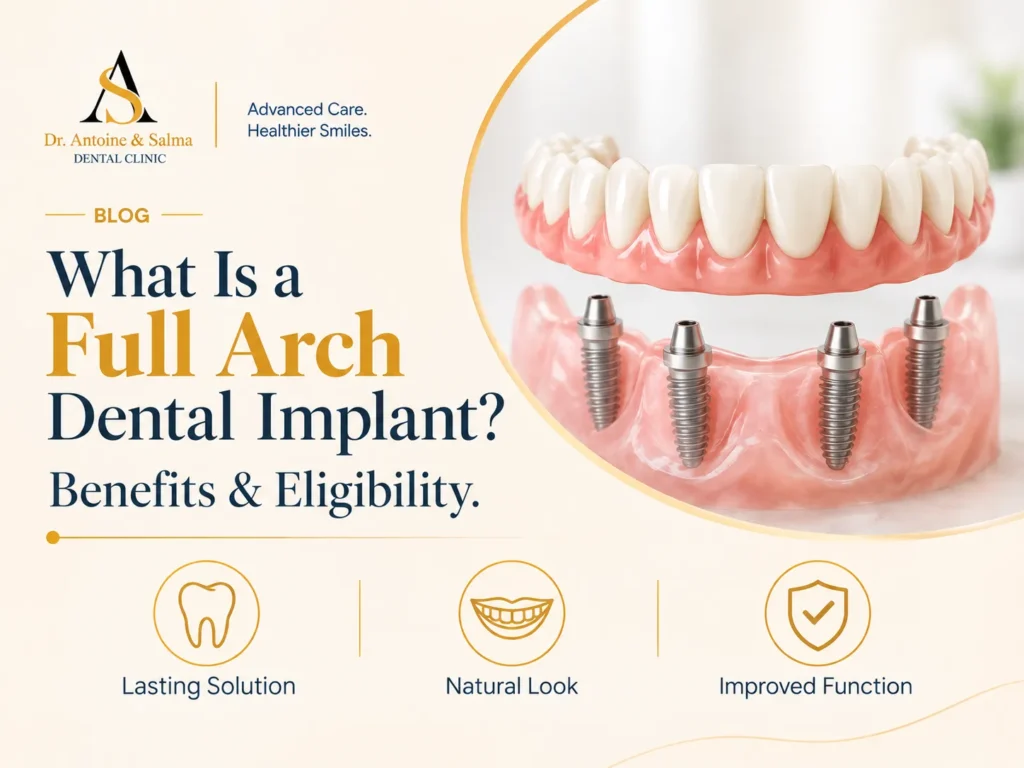
Full arch dental implants replace every tooth in one jaw using a fixed bridge supported by four to six implants. Most adults who are missing, or about to lose, most of their teeth in an arch can be assessed for them. A 3D scan, a gum check and a review of your general health decide whether you qualify.
Below you will find how the treatment works, the four main ways to restore a full arch, who is a good candidate, and how to read before and after results without being misled.
What Are Full Arch Dental Implants?
Full arch dental implants replace all the teeth in one jaw with a fixed set of teeth held by four to six implants. The implants act as artificial roots in the jawbone, and a custom bridge attaches on top. Treating both jaws is called full mouth dental implants.
You will also hear the terms full arch teeth replacement and full arch restoration. They describe the same goal: a complete set of teeth in one or both jaws, anchored to implants rather than resting on the gums.
The idea behind it is efficiency. Instead of placing one implant per missing tooth, the surgeon places a small number of implants in the strongest areas of bone and joins them with one bridge. That cuts the number of surgical sites and, in many cases, the amount of grafting needed.
Why Replace a Full Arch? What Changes Day to Day
The main benefits of full arch dental implants are stability, chewing strength and bone support. Teeth that are fixed in place do not slip while you eat or speak, and the implants transmit chewing force into the jaw, which helps slow the bone loss that follows tooth loss.
Here is what patients usually notice:
- Steadier chewing. A fixed bridge does not rock on the gums, so many people return to firmer foods. Results vary by case.
- Clearer speech. No loose plate means fewer clicks and slurs, and no need for adhesive.
- Bone support. The jawbone shrinks when it is no longer used. Implants stimulate it in a way that dentures resting on the gums do not.
- A fuller facial shape. As bone shrinks, the lower face can look collapsed. Implant-supported teeth help support the lips and cheeks.
- Less daily fuss. No soaking overnight or removing the teeth to clean them at the sink, although the bridge still needs careful cleaning.
None of this removes the need for upkeep. A full arch bridge is cleaned around, and sometimes removed by your dentist, as part of regular maintenance.
Four Ways to Restore a Full Arch
Not every full arch is built the same way. The right design depends on bone volume, jaw shape, budget and how you want the teeth to feel. The table compares the main options.
| Option | Implants per arch | Fixed or removable | Typical fit |
| All-on-4 | 4 (rear two usually angled) | Fixed | Enough bone at the front, or angled placement to avoid grafts |
| All-on-6 | 6 | Fixed | Softer bone, upper jaw, or heavy bite forces |
| Fixed full-arch bridge on multiple implants | 6 to 8 | Fixed | Good bone and a wish for the strongest support |
| Implant-supported overdenture | 2 to 4 | Removable (snaps on) | Lower budget or a preference for removable teeth |
All-on-4
Four implants carry a full bridge. The back two are tilted to use denser bone and avoid sinus or nerve areas. This reduces the need for bone grafts in many cases. Our service page on All-on-4 dental implants in Dubai covers the technique in more detail.
All-on-6
Six implants spread the chewing load over more anchor points. Dentists often choose this design in the upper jaw, where bone is softer, or for patients who grind their teeth. If you are weighing the two designs, read our comparison of All-on-4 vs All-on-6.
Fixed Full-Arch Bridges on More Implants
Some cases call for six to eight implants and a rigid bridge. This gives extra redundancy: if one implant has a problem, the others still carry the bridge. It is common when bone is strong and the patient wants maximum support.
Implant-Supported Overdentures
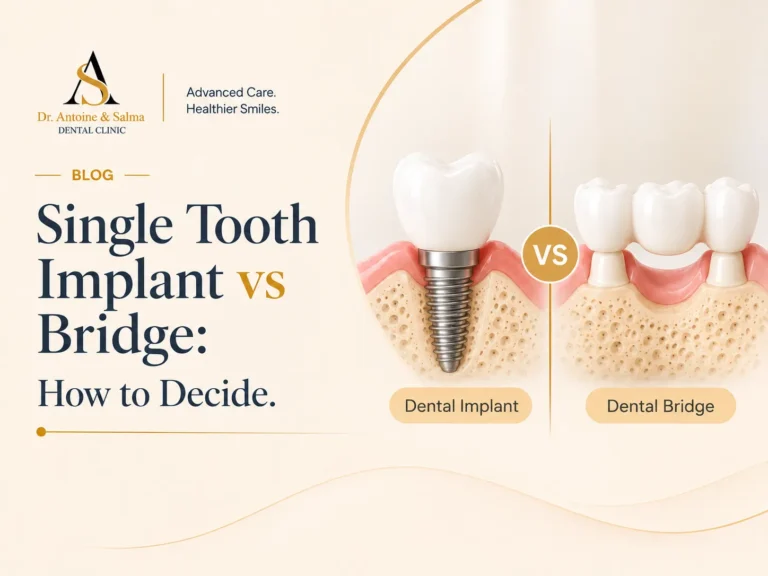
An overdenture is a removable denture that clicks onto two to four implants. It costs less than a fixed bridge and is easier to clean, but it still moves a little and covers part of the palate in the upper jaw. For a direct comparison of options, see implants vs dentures.
Who Is a Good Candidate? Eligibility, Factor by Factor
Candidates for full arch dental implants are usually adults who have lost most teeth in an arch, or have teeth that cannot be saved, and whose jawbone and general health can support surgery. Eligibility is confirmed with a clinical exam and a 3D scan, not by age or appearance.
You may be a good fit if you:
- Have missing, failing or badly worn teeth across a whole arch
- Wear dentures that slip, rub or limit what you eat
- Have gum disease that has loosened many teeth
- Are in reasonable general health, or have conditions that are well controlled
- Are ready to follow a cleaning routine and attend maintenance visits
Each factor below shows how it affects full arch dental implant eligibility.
| Factor | How it affects eligibility | What usually helps |
| Bone volume | Enough bone is needed to hold the implants | 3D scan, angled implants, or grafting |
| Gum disease | Active infection raises risk | Treat and stabilize before surgery |
| Smoking | Slows healing and raises failure risk | Quit before and after surgery |
| Diabetes | Poorly controlled blood sugar slows healing | Good control confirmed with your physician |
| Medicines | Some bone-affecting drugs need review | Discuss with your dentist and doctor |
| Jaw radiation or chemotherapy | Surgery may be delayed | Specialist coordination |
| Teeth grinding | Overloads the bridge | Night guard, possibly six implants |
There is no upper age limit. Health matters more than the number of years. Many patients in their seventies and eighties are treated successfully when they are medically stable, although outcomes vary.
When Bone Is the Obstacle
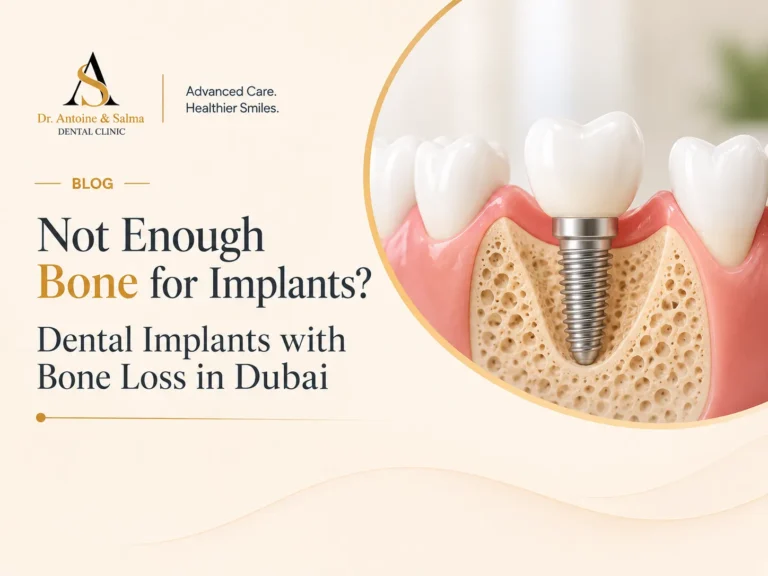
After teeth are lost, the jawbone gradually thins. Long-term denture wearers often have less bone than they expect. Having a thin bone does not always rule you out. Options may include angled implants, longer implants placed in denser areas, a bone graft, or a sinus lift in the upper back jaw. In severe cases, a surgeon may suggest other implant types, but this needs a specialist assessment.
From Consultation to Final Teeth: How the Process Works
The full arch process usually takes several months from first visit to final bridge, although many patients wear a temporary set of teeth in the meantime. Steps and timing vary with each case.
- Consultation and 3D scan: The dentist examines your mouth, takes a cone beam CT scan and reviews your health history.
- Digital planning: Implant positions and the bridge design are mapped on screen, often with a surgical guide.
- Extractions and implant placement: Failing teeth are removed and the implants are placed, usually under local anesthesia with or without sedation.
- Temporary teeth: In suitable cases, a temporary bridge is fitted the same day. Otherwise, you wear a temporary denture while the site heals.
- Healing: The implants fuse with the bone over roughly three to six months. A softer diet is advised during this time.
- Final bridge and follow-up: The final bridge is made, fitted and checked, then reviewed at regular visits.
Recovery: The First Weeks
Swelling, tenderness and minor bleeding are common in the first few days and ease over the first one to two weeks. Cold packs, prescribed medicines and a soft diet help. Avoid smoking, which slows healing. Call your dentist if you have fever, spreading swelling, or pain that grows instead of fading.
Reading Before and After Photos Honestly
Before and after full arch dental implants photos can be useful, but they only show part of the story. A fair set of results shows the teeth, the gum line, the smile from the side and front, and how the bridge looks months after fitting, not only on the day.
Use this checklist when you view them:
- Check the timing. Photos taken on the day of surgery show swelling and temporary teeth, not the final result.
- Look for cases like yours. Ask for examples with similar bone loss and age.
- Ask about consent. Reputable clinics show patient photos only with written permission.
- Remember results vary. Healing, bone and habits differ from person to person.
- Ask about follow-up. A smile that looks good at six months says little about year five.
A clinic that shows only polished images and no maintenance details is not giving you the full picture.
Risks and Complications to Know About
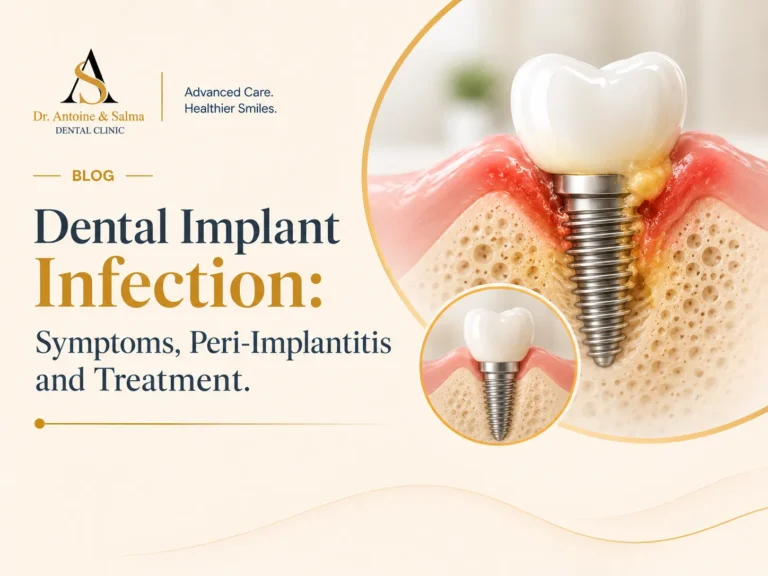
Every surgery carries risk. With full arch implants, the main concerns are infection around an implant, implants that fail to fuse with bone, a cracked or worn bridge, and gum problems that can follow poor cleaning. Early signs of trouble include bleeding, bad taste, swelling and a change in how the bridge feels. Our guide to dental implant infection explains the warning signs and what treatment involves.
Careful planning, a smoke-free mouth and regular maintenance visits reduce these risks. They do not remove them.
Full Arch Implants vs Dentures: A Quick Look
Dentures sit on the gums and move during eating and speaking. Full arch implants are anchored in bone and do not shift. Dentures cost less upfront and need no surgery, while implants cost more, require healing time, and usually offer firmer chewing. For a deeper look at the trade-offs, including upkeep and long-term cost, read our article on implants vs dentures.
What Does It Cost in Dubai?
The cost of full arch dental implants depends on how many implants are used, whether grafting is needed, the materials in the bridge, and whether one or both jaws are treated. Reputable clinics give a written plan after the exam and 3D scan, not a price from a phone call. Ask what is included: scan, surgery, temporary teeth, the final bridge and follow-up visits. Payment options may include cash, cards, and installment plans such as Tabby and Tamara. Check which options a clinic accepts.
Your Next Step: A Candidacy Check Before You Commit
You do not need to decide on a design, or even on implants, before you book. A candidacy visit at A&S Dental Clinic in Al Manara, Dubai, is built to answer one question: is full arch treatment realistic for you?
Plan to cover four things at that visit:
- A mouth exam and review of your health history
- A 3D scan to measure bone and map the nerves and sinuses
- A discussion of the options that fit, from overdenture to fixed bridge
- A written plan with the costs explained
Bring your current dentures, any past X-rays and a list of medicines. To see how the clinic approaches the treatment for full-arch dental implants, book your consultation at AS Clinic in Dubai.
Conclusion
Full arch dental implants offer a fixed, stable way to replace most or all of the teeth in a jaw, using four to six implants and a custom bridge. The right design, whether All-on-4, All-on-6, a larger fixed bridge or an overdenture, depends on your bone, gums, health and goals. A 3D scan and a careful exam give a real answer to the eligibility question. This article is general information and does not replace a clinical consultation.
Frequently Asked Questions
1. How long do full arch dental implants last?
The implants are designed to last many years, and often decades, with good care. The bridge on top can wear or chip and may need repair or replacement over time. Regular check-ups and careful cleaning are the biggest factors in how long the work lasts.
2. How many implants do I need for a full arch?
Most full arch bridges use four to six implants per jaw. All-on-4 uses four, All-on-6 uses six, and some fixed bridges use up to eight. Overdentures use as few as two. Bone quality, bite strength and your goals decide the number.
3. Am I too old for full arch dental implants?
There is no set age limit. Your general health, healing ability and bone condition matter more than age. Patients with well-controlled conditions are often treated in their seventies and eighties, though your dentist will review your medical history first.
4. Is full arch implant surgery painful?
Local anesthesia numbs the area during surgery, and sedation is available for anxious patients. Soreness, swelling and bruising are common for several days afterward and are usually manageable with prescribed medicine and cold packs. Everyone heals differently.
5. Can I get full arch dental implants with bone loss?
Often, yes. Angled implants, longer implants, bone grafting or a sinus lift can make treatment possible when bone is thin. A 3D scan shows how much bone you have and which approach fits. Severe loss may need a specialist review.
6. What is the difference between full arch and full mouth dental implants?
Full arch dental implants restore one jaw, either upper or lower. Full mouth dental implants restore both jaws. Some patients treat one arch first and the other later. The planning, recovery and cost differ depending on how many arches are treated.